
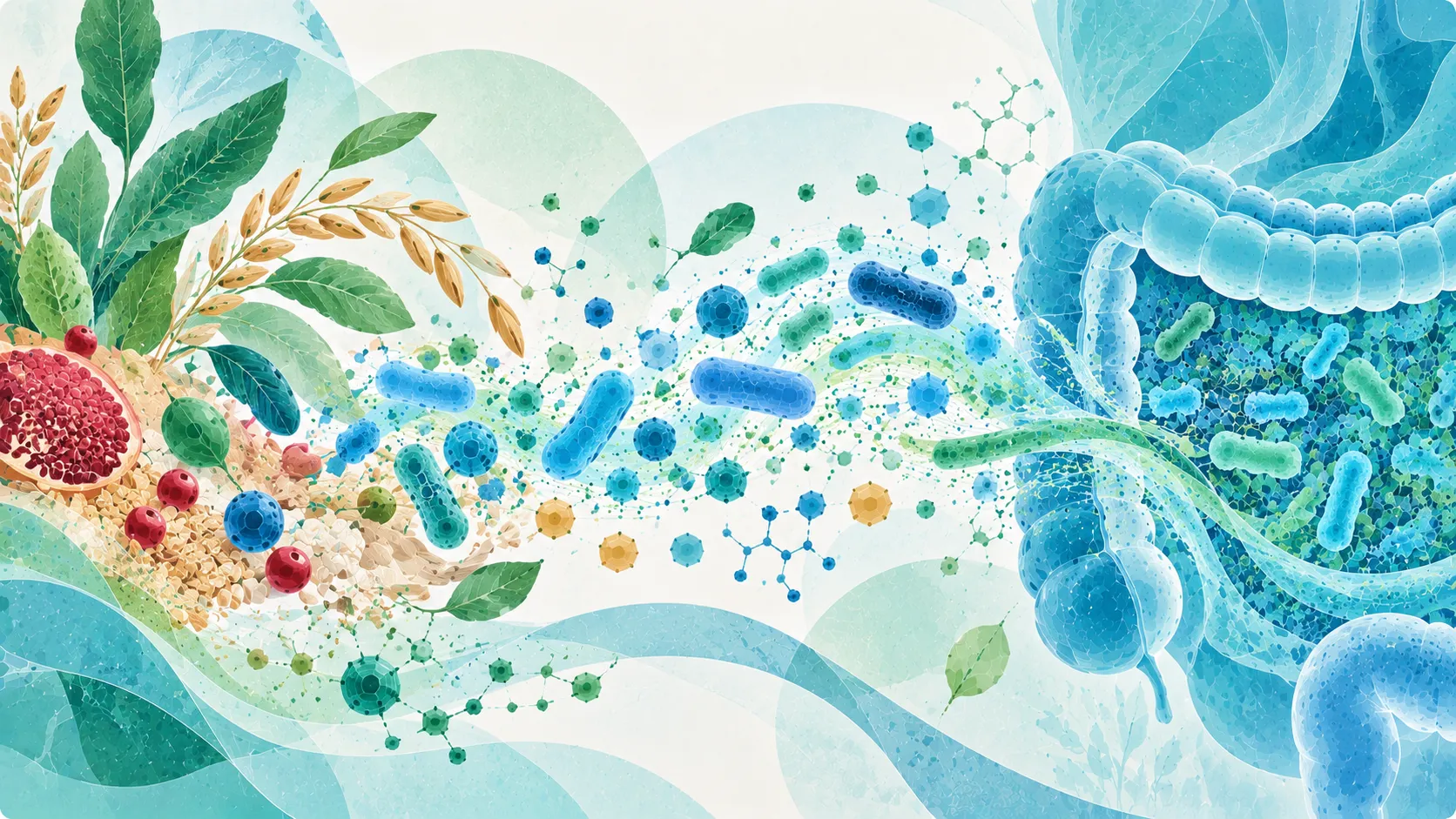
Precision microbiome therapies represent a new frontier in personalized medicine, aiming to tailor interventions based on an individual’s unique microbial composition. These therapies seek to address diseases by precisely modulating the microbiome, moving beyond broad approaches like probiotics or fecal transplants to more targeted, effective, and safer treatments.
Types and mechanisms of precision microbiome therapies
Precision microbiome therapies encompass a diverse range of next-generation interventions, including engineered bacterial strains, defined microbial consortia, postbiotics, bacteriophages, and precision prebiotics. These modalities are specifically designed to selectively enhance beneficial microbial populations or inhibit pathogenic ones, offering a targeted approach to microbiome modulation (Bajaj et al., 2022; Marinos et al., 2024; Mousa & Ali, 2024; Yaqub et al., 2025).
These therapies are underpinned by breakthroughs in high-throughput sequencing, metabolomics, and computational biology, which enable the identification of disease-specific microbial signatures and functional biomarkers. By elucidating how individual microbes and their metabolites influence host physiology, immune regulation, and drug metabolism, researchers can develop interventions that precisely modulate microbiome–host interactions to prevent or treat disease (Feng et al., 2020; Lam et al., 2019; Mousa & Ali, 2024; Spanogiannopoulos et al., 2016).
Clinical applications
- Inflammatory bowel disease (IBD): Precision microbiome therapies are emerging as a transformative approach to managing IBD, including Crohn’s disease and ulcerative colitis. These strategies aim to restore microbial balance (correct dysbiosis) through personalized donor-recipient matching in fecal microbiota transplantation (FMT), strain-specific microbial consortia, and diet-based modulation to enhance both efficacy and safety (Mousa & Ali, 2024; Nagayama et al., 2025). Advances in microbial profiling and functional genomics are enabling the identification of pathogenic or protective strains, allowing for tailored interventions that modulate host–microbe interactions involved in inflammation, barrier integrity, and immune regulation.
- Liver disease and cancer: Gut microbiota manipulation is showing increasing potential in the management of chronic liver diseases (such as cirrhosis and non-alcoholic fatty liver disease) and various cancers, particularly gastrointestinal and hepatobiliary malignancies. The microbiome influences immune checkpoint inhibitor responses, chemotherapeutic toxicity, and tumor microenvironment modulation, making it a critical determinant of treatment success (Bajaj et al., 2022; Jobin, 2018; Pan et al., 2021). Moreover, patient stratification based on microbial profiles may enable precision immunotherapy and improve predictive biomarkers for clinical outcomes.
- Drug response modulation: The human microbiome plays a pivotal role in modulating drug pharmacokinetics and pharmacodynamics, including absorption, metabolism, bioavailability, and toxicity. Specific microbial enzymes can inactivate or activate drugs, influence systemic exposure, and even contribute to idiosyncratic adverse drug reactions. Recognizing and accounting for these microbial interactions is becoming a cornerstone of precision medicine, aiding in the individualization of treatment regimens to enhance therapeutic efficacy and minimize side effects (Feng et al., 2020; Lam et al., 2019; Spanogiannopoulos et al., 2016; Zhao et al., 2023).
Challenges and future directions
- Inter-individual microbiome variability and the need for personalization: Personalized approaches are essential to account for differences in microbial diversity, function, and host-microbe interactions. This necessitates the identification and validation of robust microbial and host-derived biomarkers to enable accurate patient stratification, therapeutic targeting, and monitoring of treatment response (Mousa & Ali, 2024; Nazir et al., 2025; Petrosino, 2018; Ryu et al., 2021).
- Key challenges in implementation: Despite rapid progress, several hurdles remain in translating precision microbiome therapies into clinical practice. These include the complexity of multi-dimensional data analysis, concerns around the long-term safety and stability of engineered or live microbial therapeutics, and the lack of standardized protocols. To overcome these barriers, integrated multi-omics approaches—encompassing genomics, transcriptomics, metabolomics, and proteomics—are critical for generating actionable insights and guiding therapeutic design and implementation (Nazir et al., 2025; Yaqub et al., 2025).
- Emerging tools and innovations: Innovative technologies are expanding the precision microbiome toolkit. Metabolic modeling is being leveraged to simulate microbial interactions and predict therapeutic outcomes, facilitating the rational design of interventions. Additionally, microbial extracellular vesicles (EVs)—nano-sized particles capable of carrying bioactive molecules—are being investigated as novel vehicles for microbiome-based drug delivery and signaling modulation, offering a non-cellular, safer alternative to live microbial therapies (Marinos et al., 2024; Yang et al., 2022).
REFERENCES
Bajaj, J., Ng, S., & Schnabl, B. (2022). Promises of microbiome-based therapies. Journal of Hepatology, 76(6), 1379–1391. https://doi.org/10.1016/j.jhep.2021.12.003
Feng, W., Liu, J., Ao, H., Yue, S., & Peng, C. (2020). Targeting gut microbiota for precision medicine: Focusing on the efficacy and toxicity of drugs. Theranostics, 10, 11278–11301. https://doi.org/10.7150/thno.47289
Jobin, C. (2018). Precision medicine using microbiota. Science, 359, 32–34. https://doi.org/10.1126/science.aar2946
Lam, K., Alexander, M., & Turnbaugh, P. (2019). Precision medicine goes microscopic: Engineering the microbiome to improve drug outcomes. Cell Host & Microbe, 26(1), 22–34. https://doi.org/10.1016/j.chom.2019.06.011
Marinos, G., Hamerich, I., Debray, R., Obeng, N., Petersen, C., Taubenheim, J., Zimmermann, J., Blackburn, D., Samuel, B., Dierking, K., Franke, A., Laudes, M., Waschina, S., Schulenburg, H., & Kaleta, C. (2024). Metabolic model predictions enable targeted microbiome manipulation through precision prebiotics. Microbiology Spectrum, 12. https://doi.org/10.1128/spectrum.01144-23
Mousa, W., & Ali, A. (2024). The gut microbiome advances precision medicine and diagnostics for inflammatory bowel diseases. International Journal of Molecular Sciences, 25. https://doi.org/10.3390/ijms252011259
Nagayama, M., Gogokhia, L., & Longman, R. (2025). Precision microbiota therapy for IBD: Premise and promise. Gut Microbes, 17. https://doi.org/10.1080/19490976.2025.2489067
Nazir, A., Hussain, F., Hussain, T., Dweik, R., & Raza, A. (2025). Therapeutic targeting of the host-microbiota-immune axis: Implications for precision health. Frontiers in Immunology, 16. https://doi.org/10.3389/fimmu.2025.1570233
Pan, H., Zheng, M., Liu, L., & Cai, L. (2021). Cell/bacteria‐based bioactive materials for cancer immune modulation and precision therapy. Advanced Materials, 33. https://doi.org/10.1002/adma.202100241
Petrosino, J. (2018). The microbiome in precision medicine: The way forward. Genome Medicine, 10. https://doi.org/10.1186/s13073-018-0525-6
Ryu, G., Kim, H., & Koh, A. (2021). Approaching precision medicine by tailoring the microbiota. Mammalian Genome, 32, 206–222. https://doi.org/10.1007/s00335-021-09859-3
Spanogiannopoulos, P., Bess, E., Carmody, R., & Turnbaugh, P. (2016). The microbial pharmacists within us: A metagenomic view of xenobiotic metabolism. Nature Reviews Microbiology, 14, 273–287. https://doi.org/10.1038/nrmicro.2016.17
Yang, J., Shin, T., Kim, J., Jee, Y., & Kim, Y. (2022). A new horizon of precision medicine: Combination of the microbiome and extracellular vesicles. Experimental & Molecular Medicine, 54, 466–482. https://doi.org/10.1038/s12276-022-00748-6
Yaqub, M., Jain, A., Joseph, C., & Edison, L. (2025). Microbiome-driven therapeutics: From gut health to precision medicine. Gastrointestinal Disorders. https://doi.org/10.3390/gidisord7010007
Zhao, Q., Chen, Y., Huang, W., Zhou, H., & Zhang, W. (2023). Drug–microbiota interactions: An emerging priority for precision medicine. Signal Transduction and Targeted Therapy, 8. https://doi.org/10.1038/s41392-023-01619-w